
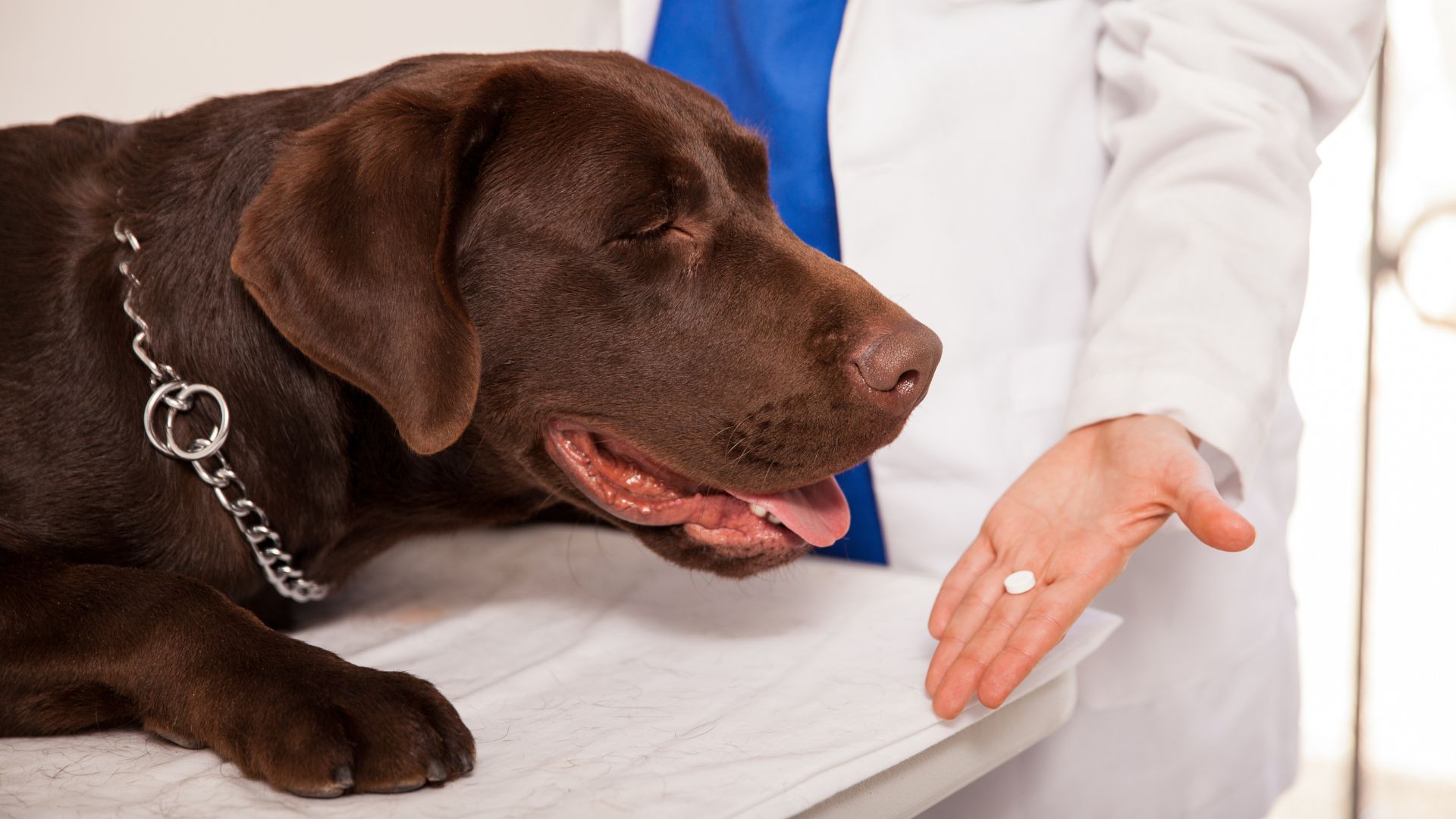
Heartworm disease is one of the most dangerous and most preventable conditions affecting dogs and cats today. Caused by parasitic worms (Dirofilaria immitis) and spread through the bite of a single infected mosquito, heartworms can damage the heart, lungs, and blood vessels — sometimes permanently. Here in Northeast Florida, where mosquitoes thrive nearly year-round, the risk is constant.
For dogs, treatment exists but can be far more difficult, stressful, and costly than prevention. For cats, there is no approved treatment at all — making prevention the only option. That’s why we strongly emphasize year-round heartworm protection for both dogs and cats at Palm Valley Veterinary Center.

Dogs are the natural host for heartworms, which means the worms can mature, reproduce, and thrive inside your dog’s body. Left untreated, a dog can harbor hundreds of worms, causing lasting damage to the heart, lungs, and arteries — damage that can persist long after the worms are gone. In dogs, heartworm disease can become severe and expensive to treat, which is why the American Heartworm Society recommends year-round prevention and regular testing.
Prevention is safer, easier, and far less stressful than treating an established infection. When dogs do become infected, treatment typically involves a structured protocol using melarsomine, the standard adulticide, combined with strict exercise restriction and supportive care to manage the process safely. Treatment can take several months and requires patience, but the outcome is worth it — and our team will monitor your dog closely throughout.
A persistent, soft cough that doesn’t seem to go away.
Reluctance to exercise or tiring quickly on walks.
Reluctance to exercise or tiring quickly on walks.
A swollen belly from fluid accumulation in advanced cases.

Cats need heartworm prevention too. Although cats are not the “classic” heartworm patient, they can absolutely be infected — and even a small number of worms can cause serious illness. Heartworm disease in cats can be dangerous, difficult to diagnose, and frustrating to manage. It often mimics asthma or allergic bronchitis, making it easy to miss entirely.
Even more important: there is no approved drug therapy to eliminate heartworm infection in cats the way there is in dogs. That single fact makes prevention not just valuable — it makes it essential. Prevention is the only protection.
Coughing, wheezing, or difficulty breathing
Vomiting unrelated to eating.
Decreased activity or lethargy.
In severe cases, sudden collapse or death with no warning signs.
For dogs, ProHeart 12 offers one of the simplest ways to stay protected. It is the only FDA-approved injection that prevents heartworm disease in dogs for a full 12 months with a single veterinary-administered dose. ProHeart 12 is labeled for healthy dogs 12 months of age and older, and at the time of injection it also treats existing larval and adult hookworm infections covered by the label.
The biggest advantage of long-acting prevention is consistency. Missed monthly doses are one of the easiest ways protection breaks down. By incorporating ProHeart into your dog’s wellness care, you reduce the risk of forgetfulness and make heartworm prevention simple, dependable, and convenient. It’s especially ideal for busy families, multi-dog households, or any pet parent who wants the confidence of knowing their dog is protected without the monthly routine.
Heartworm prevention is safe, effective, and far less expensive than treatment. We offer a range of preventive options for both dogs and cats, including monthly topical and oral preventives to fit every lifestyle and budget.
Do indoor pets need heartworm prevention?
Yes. Mosquitoes get indoors — through open doors, garages, screened porches, and on clothing. Both indoor dogs and indoor cats can be exposed. Year-round prevention remains the best defense, regardless of your pet’s lifestyle.
Protect Your Pet Today
Call Palm Valley Veterinary Center to schedule a heartworm testor to learn which prevention plan is right for your dog or cat.
In Northeast Florida, heartworm prevention isn’t optional — it’s essential.